
You’ve seen those two simple words on your favorite sparkling water label dozens of times: “natural flavors.” But what exactly are they? According to the FDA’s regulatory definition in 21 CFR 101.22(a)(3), natural flavors are flavorings derived from plant or animal sources including spices, fruits, vegetables, herbs, bark, roots, dairy, meat, seafood, or fermentation products, extracted through processes like distillation, roasting, heating, or enzymolysis. Their primary function is flavoring, not nutrition.
If that sounds surprisingly broad, you’re not alone in wondering what you’re actually drinking. When you order a sparkling water at your table alongside tacos al pastor or enchiladas verdes, that refreshing hint of lime or grapefruit comes from somewhere specific, even if the label doesn’t spell it out. Much like how the distinctions between Tex-Mex vs Mexican cuisines surprise many diners who assume they’re identical, the gap between what “natural” sounds like and what it legally means can be eye-opening.
The mystery isn’t just about chemistry. It’s about transparency, trust, and making informed choices about what you consume. Whether you’re reaching for a Canada Dry, LaCroix, or Perrier at a Mexican restaurant or your local mercado, understanding these ingredients helps you decode what you’re putting in your body. This guide walks you through the regulatory framework, extraction methods, specific permitted sources, and real-world label examples from popular brands, giving you the practical knowledge to read sparkling water labels with confidence in 2026 and beyond.
What ‘Natural Flavors’ Really Means on Your Sparkling Water Label
When you flip over that bottle of Topo Chico or any sparkling water, “natural flavors” appears on nearly every label. But what does that actually mean? According to the U.S. Food and Drug Administration’s regulation 21 CFR 101.22(a)(3), a natural flavor is a flavoring derived from plant or animal sources. These sources include fruits, vegetables, spices, herbs, edible yeast, bark, roots, leaves, dairy products, meat, seafood, poultry, eggs, or fermentation.
The FDA specifies that these flavorings must be extracted or processed through methods like distillation, extraction, roasting, heating, or enzymolysis. What you’re getting is essentially an essential oil or extract from a natural source, concentrated to provide taste without adding nutritional value. The regulation makes clear that the significant function of these ingredients is flavoring, not nutrition.
This differs from artificial flavors, which are synthesized in laboratories from chemical compounds. Natural flavors start with something that grew or lived in nature. When you see “carbonated water and natural flavors” on a LaCroix or Perrier label, you’re looking at extracts from real ingredients like citrus peels, cucumber, berries, or aromatic herbs. The label won’t specify exactly which source creates that particular flavor profile, but the regulation ensures it originated from something natural rather than purely synthetic chemistry.
For sparkling water drinkers at El Caballito pairing their tacos with a crisp agua mineral, this means the subtle lime or grapefruit notes come from actual citrus sources, processed and concentrated to flavor your beverage.
How Natural Flavors Are Created and Added to Sparkling Water
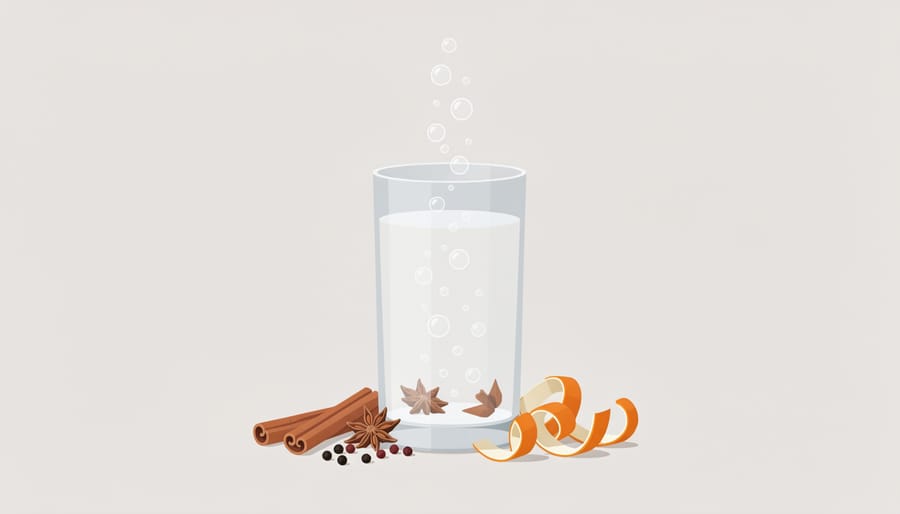
Creating natural flavors for sparkling water starts with selecting the source material, citrus peels, herbs, berries, or spices that hold the aromatic compounds you’ll eventually taste. Flavor houses then use one of several FDA-approved extraction methods to capture and concentrate those compounds. Distillation involves heating the raw material until volatile flavor oils vaporize, then cooling them back into liquid form. Extraction uses solvents (often carbon dioxide under pressure) to pull essential oils from plant tissues without burning or altering their character. Roasting and heating can develop flavor compounds through controlled heat, similar to how toasting spices releases their aroma.
Enzymolysis, a less familiar term, uses natural enzymes to break down plant cell walls and release flavor molecules that would otherwise stay locked inside. The result from any of these processes is a highly concentrated essential oil or extract, a few drops can flavor an entire batch of agua mineral. These concentrates contain the volatile compounds responsible for taste and smell: limonene from lime peel, linalool from mint, or esters from strawberries.
When bottlers add these natural flavors to sparkling water, they’re working with tiny quantities. The carbonated water itself provides the fizz and mineral character, especially in brands like Topo Chico or Perrier that start with natural mineral sources. The flavor extract goes in during the final mixing stage, just before bottling, measured in parts per million to deliver consistent taste without overwhelming the clean, refreshing quality that defines good sparkling water.
Here’s the crucial point: these natural flavors exist solely for taste, not nutrition. They don’t add vitamins, minerals, calories, or fiber. The FDA specifically defines natural flavors as ingredients whose significant function is flavoring rather than nutrition. That lime or grapefruit note in your sparkling water comes from the extracted essence of the fruit, not the fruit itself, which means you’re tasting the citrus character without any of its nutritional content.
Where Natural Flavors Come From: Sources and Ingredients
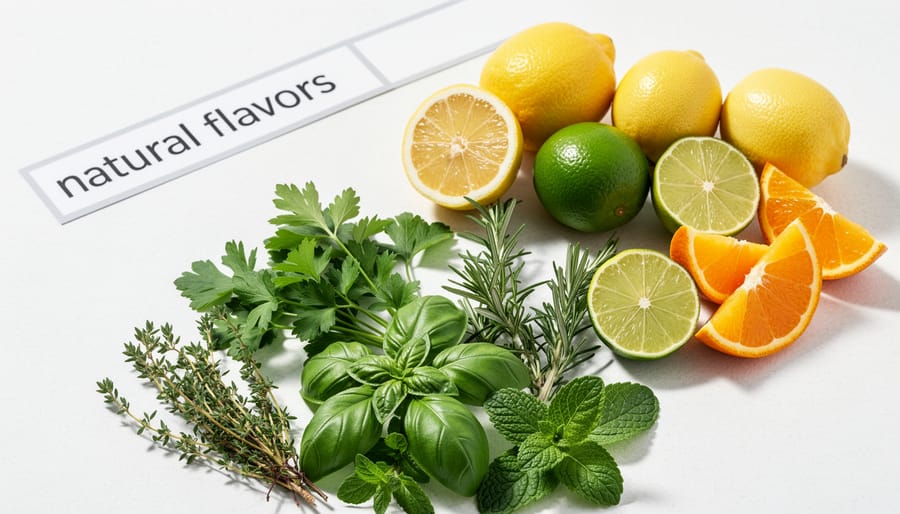
The natural flavors in your sparkling water can come from a surprisingly wide range of sources, all carefully regulated by the FDA. Under 21 CFR 101.22(a)(3), permitted sources include spices, fruits, fruit juice, vegetables, vegetable juice, edible yeast, herbs, bark, roots, leaves, and fermentation products. These essential oils and extracts deliver the crisp lime, grapefruit, or berry notes you taste without adding any nutritional value, their job is purely flavor.
For anyone familiar with Mexican ingredients many of these sources feel like old friends. Citrus fruits like lime, orange, and grapefruit are staples in both sparkling water and Mexican cooking. Fresh herbs such as mint and cilantro bring vibrant, cooling notes to beverages the same way they brighten tacos and salsas. Even fermentation sources, which might sound technical, connect to traditional Mexican drinks like tepache and pulque.
- Citrus Extracts
- Essential oils from lime, lemon, orange, and grapefruit peels create the bright, clean flavors in most citrus sparkling waters. These same fruits are fundamental to Mexican beverage culture, from agua frescas to cocktails.
- Herb Extracts
- Mint, basil, and other herb extracts provide refreshing, aromatic notes. Mint pairs naturally with lime in both sparkling water and Mexican mojitos.
- Spice Derivatives
- Ginger, cinnamon, and other spice extracts add warmth and complexity to flavored waters. These spices also feature prominently in Mexican hot chocolate and traditional beverages.
- Fermentation Sources
- Natural flavors can derive from fermented ingredients, creating subtle depth and complexity. This connects to Mexico’s rich tradition of fermented drinks like tepache and kombucha.
The beauty of these natural sources is their versatility. A single lime can yield essential oils from the peel, extracts from the juice, and aromatic compounds from the zest, all qualifying as natural flavors. When you’re sipping Topo Chico at El Caballito, those subtle flavor notes might come from any combination of these sources, extracted through distillation, roasting, or heating to capture the essence of the original ingredient.
What’s Actually in Popular Sparkling Water Brands
When you pick up a bottle of sparkling water at a Mexican restaurant or scan the shelf at your local tienda, the ingredient lists are strikingly similar across every major brand. This simplicity is no accident, it reflects both regulatory standards and a commitment to minimal processing that makes sparkling water such a clean choice alongside your carnitas or fish tacos.
Topo Chico, the iconic Mexican mineral water beloved at cantinas and restaurants throughout North America, contains just carbonated mineral water and natural flavors in its flavored varieties. Where to buy Topo Chico has become a frequent question as the brand gains popularity, but the ingredient story remains refreshingly straightforward. The unflavored original contains only the mineral-rich spring water from Monterrey, naturally carbonated.
LaCroix follows an identical formula: carbonated water and natural flavors. That’s it. No sweeteners, no sodium, no artificial ingredients of any kind. The pamplemousse or lime flavor you taste comes entirely from those FDA-permitted natural flavor extracts.
Canada Dry Sparkling Seltzer Water takes the same minimalist approach with carbonated water and natural flavors, explicitly containing no added sugars. Even European imports like Perrier stick to this pattern, their bottles list natural sparkling mineral water and natural flavor.
This universal simplicity makes sparkling water labels easy to navigate. Whether you’re choosing a beverage to pair with street tacos or looking for a clean mixer for your mezcal cocktail, you’re getting essentially the same clean ingredient profile across brands: water, carbonation, and those natural flavor extracts derived from real fruits, herbs, and spices. The differences lie in the mineral content of the source water and which specific natural flavors each brand selects.
How to Read Sparkling Water Labels Like a Pro
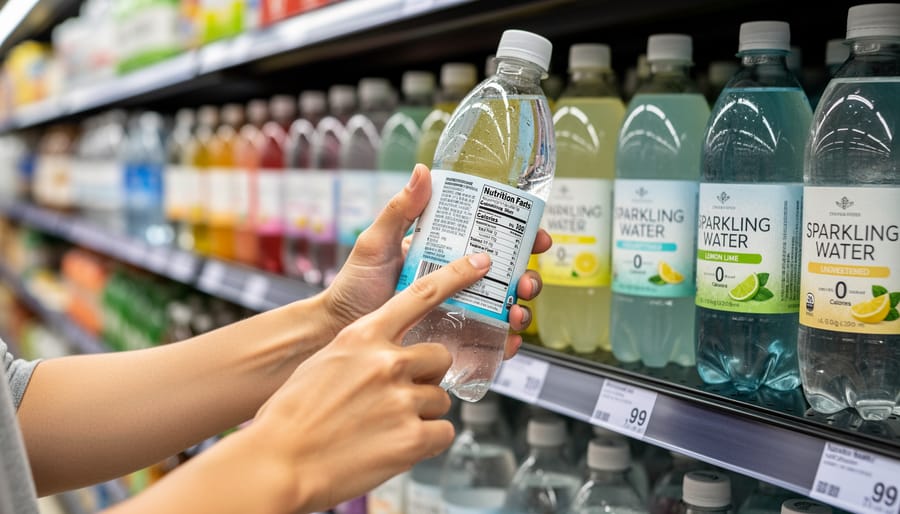
Reading sparkling water labels is simpler than you might think once you know what matters. The ingredient list should be short, ideally carbonated water and natural flavors, maybe minerals, and nothing else. That simplicity is a quality marker, whether you’re scanning the cooler at your local tienda or choosing a beverage pairing at El Caballito.
Start with the ingredient list, not the front-of-package promises. Brands like LaCroix and Topo Chico list carbonated water and natural flavors as their only ingredients, while Perrier adds natural sparkling mineral water. If you see added sugars, sweeteners, or preservatives, you’ve wandered into flavored water territory, not true sparkling water. The FDA requires that natural flavors serve a flavoring purpose rather than nutritional one, so those two words tell you the essence comes from real plant or animal sources but won’t specify which fruit, herb, or spice.
When choosing sparkling water to pair with tacos or to understand tequila health benefits watch for these label clues:
- Ingredient list under five items signals authentic sparkling water
- No added sugars, sodium, or artificial sweeteners maintains clean flavor
- Natural flavors without colorings or preservatives indicates quality sourcing
- Glass bottles often preserve carbonation and flavor better than plastic
- Country of origin can hint at mineral content and water source quality
Mexican agua mineral traditions value purity and effervescence above all, so the cleaner the label, the closer you are to that ideal. The same principle applies whether you’re assembling meal kits essentials at home or selecting beverages at a restaurant. Trust brands that keep it simple, and remember that natural flavors are just the beginning of understanding what makes quality sparkling water worth pouring.
How Natural Flavors in Sparkling Water Understanding What S Works
Natural flavors work by tricking your taste buds into experiencing fruit, citrus, or herbs when you’re drinking plain carbonated water. The process starts with a concentrated extract, think of squeezing a thousand limes and capturing just the essential oil. Manufacturers take that ultra-concentrated essence and add it to carbonated water in microscopic amounts, often measured in parts per million.
When you crack open a Topo Chico with lime flavor, you’re not getting actual lime juice. Instead, you’re tasting volatile aromatic compounds extracted from real limes through distillation or cold-pressing. These compounds dissolve into the carbonation, and when the bubbles reach your mouth, they release those aromatic molecules. Your nose and tongue detect them as “lime,” even though there’s no pulp, juice, or nutritional content from the fruit itself.
The carbonation plays a crucial role here. CO2 acts as a carrier, lifting those flavor molecules to your olfactory receptors. That’s why flat sparkling water tastes different, the delivery mechanism weakens. The natural flavors themselves don’t provide calories, vitamins, or sugar; they exist purely for sensory experience, meeting the FDA’s requirement that their “significant function is flavoring rather than nutrition.”
How Natural Flavors in Sparkling Water Understanding What S Is Used
Sparkling water manufacturers use natural flavors to create refreshing taste experiences without adding calories, sugar, or artificial ingredients. The primary application is simple: transforming plain carbonated water into a flavorful drink that appeals to people moving away from sodas and sugary beverages. Brands like LaCroix, Perrier, and Topo Chico rely on these concentrated extracts to deliver familiar fruit and herb profiles, lime, grapefruit, berry, mint, that pair beautifully with Mexican meals without overwhelming the palate.
At Mexican restaurants, naturally flavored sparkling water serves multiple roles. It cleanses the palate between courses of rich mole or spicy salsa, provides a refreshing alcohol-free option alongside margaritas and cerveza, and offers a sophisticated alternative to still water. The subtle citrus notes in many varieties complement ceviche, tacos, and seafood dishes without competing with the complex flavors of authentic Mexican cuisine.
These flavors also benefit people seeking hydration with taste. The natural extracts make it easier to drink enough water throughout the day, especially for those who find plain water boring but want to avoid sweeteners and artificial additives.
Common Questions About Natural Flavors in Sparkling Water
What exactly are natural flavors in sparkling water?
Natural flavors in sparkling water are concentrated extracts derived from plants, typically fruits, herbs, spices, or vegetables, that give the water its taste without adding calories or nutrition. They’re essential oils or extracts obtained through FDA-approved methods like distillation or extraction, designed purely for flavor.
Why don’t labels tell me which specific fruits or plants are used?
The FDA requires manufacturers to list “natural flavors” but doesn’t mandate disclosure of the exact blend, which companies often consider proprietary. A lime-flavored sparkling water might contain extracts from multiple citrus sources, herbs, or other natural ingredients that create the final taste profile.
What does WONF mean on beverage labels?
WONF stands for “With Other Natural Flavors,” indicating the product contains the named flavor (like lime) plus additional natural flavoring components. You’ll rarely see this on simple sparkling waters like Topo Chico, but it’s common on more complex flavored beverages.
Are natural flavors in sparkling water safe to drink?
Yes, natural flavors used in beverages must meet FDA safety standards under 21 CFR 101.22(a)(3) and come from approved food sources like fruits, vegetables, herbs, and spices. These are the same flavor extracts used throughout the food industry, including in restaurants.
The confusion around natural flavors often stems from their intentional vagueness. When you’re sipping a Topo Chico with lime at El Caballito, that crisp citrus note comes from natural lime oil extracted through distillation or cold-pressing, but the exact formulation remains the manufacturer’s secret. This isn’t deceptive, it’s standard practice across the beverage industry, from your morning coffee creamer to your evening sparkling water.
Understanding these labels helps you make confident choices. Whether you’re selecting beverages for a taco night or simply want to know what you’re drinking with your chile relleno, “natural flavors” means plant-based taste without synthetic chemicals, added sugars, or nutritional content. The simplicity you see on a Perrier or LaCroix label, carbonated water and natural flavors, reflects exactly what you’re getting: bubbles and plant-derived taste.
Now that you understand what “natural flavors” actually means on your sparkling water label, you can make more informed choices at El Caballito and beyond. That mysterious ingredient isn’t so mysterious anymore. It’s simply concentrated essence from real plant sources like citrus, herbs, and spices, extracted through processes like distillation and heating, then added to carbonated water for taste.
Whether you’re pairing a lime-flavored Topo Chico with carnitas tacos, cleansing your palate between bites of mole, or enjoying a cold mineral water alongside your margarita, you’re participating in a long Mexican tradition of valuing pure, refreshing beverages. The simplicity of those ingredient lists matters. Carbonated water and natural flavors. Nothing more.
Next time you reach for sparkling water at our restaurant or scan the refrigerator case at the store, you’ll know exactly what you’re getting. That clarity makes every sip a little more satisfying. The best beverages, like the best Mexican food, don’t need complexity to be exceptional. They just need quality ingredients and respect for tradition.
Salud to informed choices and the simple pleasure of a perfectly carbonated agua mineral.