
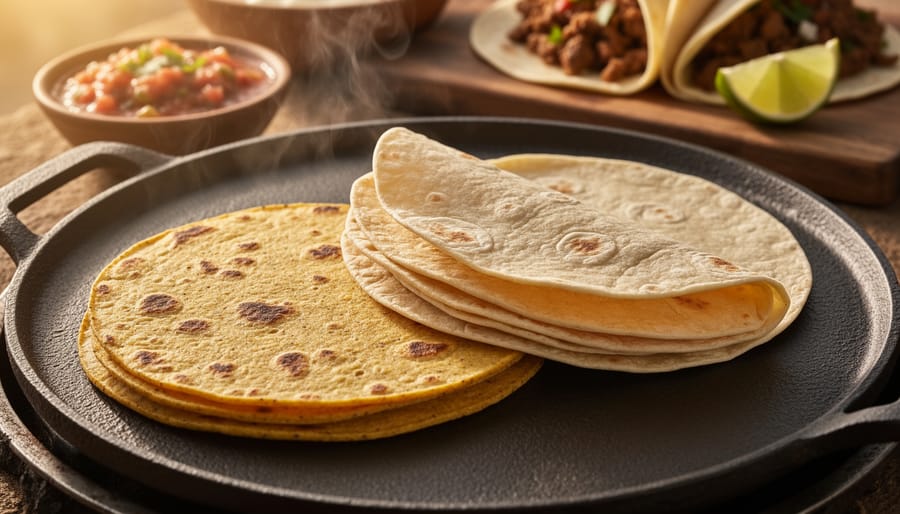
Corn tortillas win for most tacos, and flour wins for anything you need to fold, wrap, or stuff without a crack. The deciding factor is what’s on your plate: corn brings the toasty, earthy flavor that street tacos were built around, while flour brings softness and stretch that make burritos and quesadillas behave.
We tested both side by side, warming them on a hot comal and loading them with the same fillings. Corn tortillas carried the unmistakable perfume of masa, sweet and a little smoky, and they held up beautifully under al pastor and carnitas. Flour tortillas stayed pliable and forgiving, which made them the easier pick for a loaded burrito or a melty quesadilla.
Both have deep roots. Corn has been the heart of Mexican cooking since long before the Spanish arrived, nixtamalized and pressed into the daily bread of the table. Flour tortillas came later, shaped by wheat and perhaps best loved in the northern states.
Both are easy to find, too. Instacart lists options from Super C, including a corn and flour pairing, for same-day delivery or curbside pickup.
Below, you’ll find a quick side-by-side, a look at what makes each one special, and a clear guide to choosing the right tortilla for your next meal.
Corn vs. Flour Tortillas at a Glance
Here’s the short version, whether you’re standing in the tortilla aisle or deciding what to order at the table. We cooked and tasted both styles side by side, and each has a clear lane.
| Feature | Corn Tortillas | Flour Tortillas |
|---|---|---|
| Flavor | Earthy, toasty, slightly sweet | Mild, buttery, tender |
| Texture | Gentle chew with a little bite | Soft, stretchy, pillowy |
| Best uses | Street tacos, enchiladas, tostadas, chilaquiles | Burritos, quesadillas, fajitas, larger tacos |
| Durability when folded | Can crack if cold; warm them first | Folds and wraps without fuss |
| Price tier | Instacart lists Small Tortillas Corn at $3.49 | Instacart lists Soft Tortillas Flour at $3.99 |
The pattern holds up at the stove. Corn tortillas bring the aroma of masa and a bit of backbone, so they shine under simple, bold toppings. Flour tortillas give you flexibility, wrapping around heavier fillings without tearing.
A quick note on cost: the two sit close together on the shelf, so price rarely decides it. Prices and availability shift from store to store, so check the listing when you buy. Let the dish on your plate make the call.
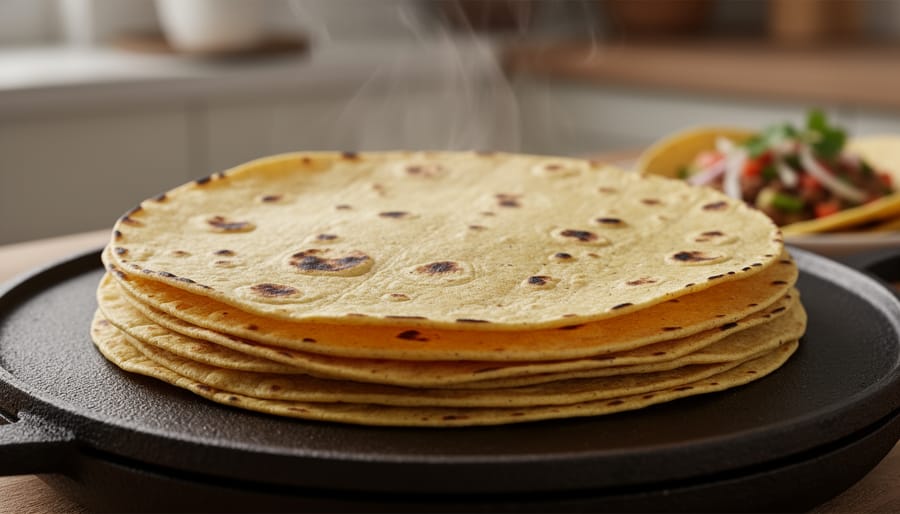
What Each Tortilla Really Is: Masa Roots and Wheat Traditions
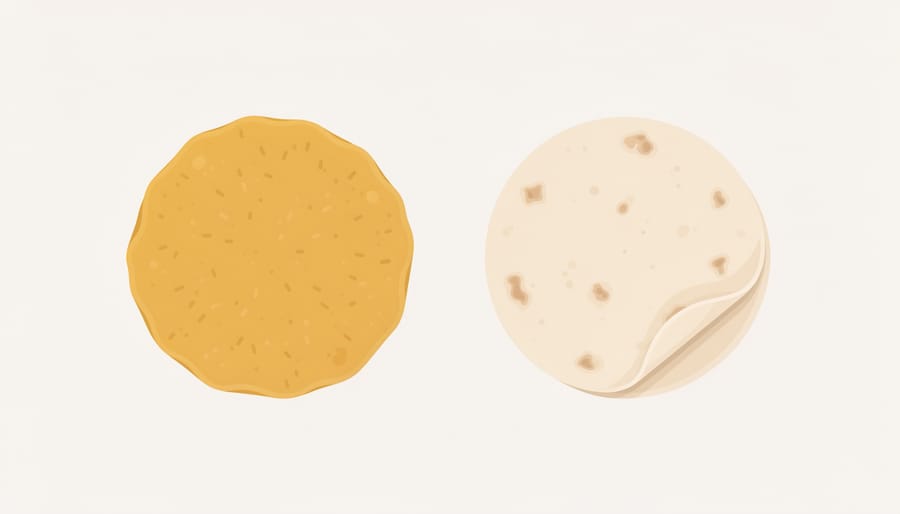
Corn Tortillas: The Heart of Mexican Cooking
Walk past any busy taquería at lunch and you’ll hear it before you see it: the soft slap of masa being patted flat, then the hiss as it meets a hot comal. Within seconds, a sweet, toasty aroma rolls out, somewhere between popcorn and fresh bread. That smell is corn tortilla country, and in our kitchen testing it’s the one that makes people look up from their phones.
Corn tortillas are the quiet backbone of Mexican daily life. They scoop, wrap, fold, fry and mop up sauce, and for generations they’ve been the edible plate and utensil at the same time. On the street, they’re the foundation for tacos al pastor, the crispy base of tostadas, and the soak-it-all-up layer in a bowl of chilaquiles. Nothing fancy, which is exactly why they work.
A few terms come up constantly once you start cooking with them:
- Masa
- The soft, pliable corn dough that becomes a tortilla once pressed and cooked.
- Nixtamalization
- The ancient process of soaking and cooking corn in an alkaline solution, which loosens the hulls and gives masa its signature flavor and aroma.
- Comal
- A flat griddle, traditionally clay or cast iron, used to toast tortillas until they puff and blister.
- Masa harina
- Dried, finely ground nixtamalized corn flour that turns back into dough when you add water.
- Pre-cooked corn flour
- A convenient, ready-to-mix corn flour that skips the soaking and grinding steps.
For home cooks, pre-cooked corn flour and masa harina are the friendly shortcut. Stir in warm water, rest the dough briefly, press, and toast. You get that authentic flavor without spending a day on the corn itself.
Flour Tortillas: Soft, Stretchy and Made for Wrapping
Flour tortillas are the soft-spoken workhorse of the table. Wheat flour, a little fat and water come together into a dough that stretches thin without tearing, and that stretch is the whole secret. Cooked on a hot griddle, the tortilla puffs in spots, picks up pale golden freckles and comes off tender, pliable and just a bit buttery.
The story runs north. Wheat grew well in the dry, open country of northern Mexico, so cooks there leaned on flour for their daily bread, and the flour tortilla became part of the region’s everyday cooking. From there it traveled across borders and into kitchens everywhere, which is how it ended up wrapped around so many favorite dishes.
In our experience, this is the tortilla you reach for when the plate needs structure and a gentle hug. Its wide, flexible shape folds around a hearty burrito without splitting, and it crisps beautifully around melted cheese in a quesadilla. It also works for the larger taco builds, where you want a generous pile of fillings and a wrapper that bends instead of cracks. When we warmed them in a dry pan, they stayed supple and held up to juicy fillings without any fuss.
Dimension by Dimension: Taste, Texture, Price and Availability
Flavor and Texture
Pull a corn tortilla off the comal and the first thing you notice is the smell: toasty, a little sweet, like fresh popcorn meeting warm earth. That’s the nixtamalized masa talking. The flavor follows suit, earthy and gently sweet, with a tender chew that gives way slowly and a few lightly charred freckles for character. It tastes like corn because it is corn, and it’s the reason a simple taco of carne asada and onion can feel complete.
Flour tortillas play a different tune. They’re mild, buttery and soft, with a stretch that feels almost pillowy when they’re fresh off the heat. The wheat and fat give them a quiet richness that lets the filling take the lead instead of competing with it. Fold one around beans and cheese and it hugs everything without tearing, with just a hint of toasted golden spots where it kissed the pan.
So the sensory trade is simple: corn brings flavor and a little rustic bite, while flour brings comfort and flexibility. If you’re curious how corn holds up in everyday kitchens, FoodSnap reports that real home cooks have tested store-bought corn tortillas for street tacos, a good sign that you don’t need to press your own masa to enjoy that classic taste at home.
Price and Where to Find Them
Here’s the good news for your wallet: whichever tortilla you land on, both styles are easy to find and sit in a pretty similar price neighborhood. When we looked at what’s currently listed on Instacart, the numbers told a friendly story, with corn and flour trading places depending on the product.
- Small Tortillas Corn is listed at $3.49.
- Soft Tortillas Flour is listed at $3.99.
- Mejicano 7″ Flour Tortillas are listed at $3.99, down from $4.99.
- Pre Cooked Corn Tortillas are listed at $5.49.
- Pre-Cooked Corn Flour, for home cooks who want to press their own, is listed at $4.72.
What stands out is that the simplest packaged corn option comes in a touch lower than the flour, while the pre-cooked and make-your-own routes cost a bit more. That makes sense: you’re paying for the shortcut, or for the fun of turning masa into tortillas yourself at home.
Convenience matters just as much as the shelf tag. Instacart lists Super C Corn And Flour Tortillas for same-day delivery or curbside pickup, so you can grab both styles in one go and taste them side by side. In Canada, Wholesale Club Tortillas & Flatbreads are listed for same-day delivery, with delivery in as fast as 1 hour.
One gentle reminder: prices and availability shift from store to store and day to day, so check the listing at the moment you buy.
Use Case and Recipe Fit
Think of the dish first, and the tortilla usually picks itself. Corn belongs with street tacos, enchiladas, tostadas and chilaquiles, where its earthy flavor is part of the point. Flour is the natural fit for burritos, quesadillas, fajitas and larger tacos, where you want a tender, bendy wrap that stretches around generous fillings. The difference between how the two kitchens use them comes up again in our look at Tex Mex vs Mexican cooking.
When we tested store-bought corn tortillas in a home kitchen, warming made all the difference. Set a dry comal or skillet over medium heat and toast each tortilla until it turns pliable and gives off that sweet, toasty aroma. Skip this and the edges tend to crack the moment you fold. Stack the warm ones in a clean towel to keep them soft.
Juicy fillings tell the rest of the story. Corn handles saucy enchiladas and chilaquiles well, since it softens into the sauce without falling apart. Flour tolerates heaping, drippy fillings in a burrito or fajita without much fuss.
Corn Pros
- Authentic, earthy flavor suits traditional street tacos.
- Makes a naturally gluten-free-friendly base.
- Holds up nicely in sauce for enchiladas and chilaquiles.
Corn Cons
- Can crack if you skip warming it on the comal.
- Less forgiving with oversized, heavy fillings.
Flour Pros
- Soft and flexible, easy to fold and roll.
- Great for big fillings in burritos and fajitas.
- Mild flavor lets the filling take center stage.
Flour Cons
- Contains gluten, so it isn’t suited to every eater.
- Milder taste lacks the toasty depth of corn.
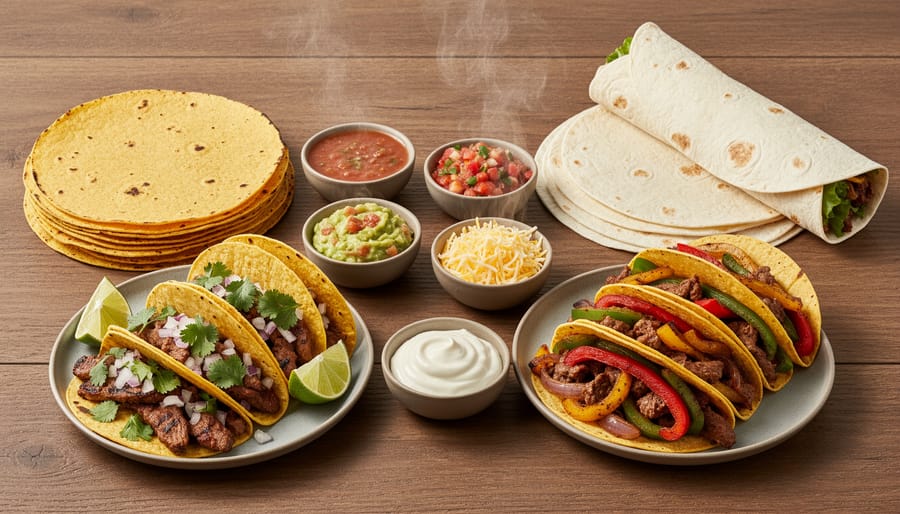
Which Tortilla Should You Choose? A Guide by Eater and Occasion
Think of this as a choice about the plate in front of you, not a contest. Pick corn if you want that classic street-taco flavor, the toasty, earthy taste that pairs so naturally with al pastor, carnitas and a squeeze of lime. Corn is also the easy call when you need a gluten-free-friendly option, though anyone with a serious allergy should always confirm preparation and cross-contact with the kitchen.
Reach for flour when softness and size matter. Burritos, quesadillas, fajitas and kids’ dinners all love a tender, stretchy tortilla that folds without a fuss and holds a generous filling. If you’re feeding a mixed table of picky eaters and adventurous ones, flour is the friendly, forgiving choice.
The most fun way to settle it? Order both at a taqueria like El Caballito and taste them side by side. Same carne asada, two completely different personalities.
Either tortilla plays well with a drink in hand. A tangy margarita or a cold, crisp beer is a lovely match, but you can keep it light and alcohol-free with refreshing aguas frescas. If you’re curious about sipping tequila, a read on tequila health benefits adds some context, and these menu pairings offer more ideas for building a table you’ll love.
Corn vs. Flour Tortilla FAQs
Are corn tortillas healthier than flour?
It depends on what you’re after, and the label on your package matters more than the grain alone. Corn is the simpler, more traditional base, while flour tends to be softer and richer, so compare ingredients for the brands you actually buy.
Which tortilla is better for tacos?
For classic street tacos, corn is our pick for its toasty, earthy flavor. Flour makes more sense when you’re building a larger, juicier taco that needs a sturdier, stretchier wrap.
Can I swap corn for flour in a recipe?
Often, yes, but expect a different result. Corn tortillas are smaller and more delicate, so they work for enchiladas and tostadas, but a burrito or big quesadilla wants flour’s pliability.
Why do corn tortillas crack?
Usually they’re cold or dry. Warm them on a hot comal until they turn soft and fragrant, and they’ll fold without splitting.
Are corn tortillas gluten-free?
Corn itself is gluten-free, which makes corn tortillas a friendly option for many eaters. Always check the packaging, though, since some products are made alongside wheat.
Planning a night out where the tortilla question comes up at the table? Ordering both and tasting them side by side beats any debate. And if you’re pairing your tacos with a drink, it’s worth a quick read of the science on blood pressure before you raise a glass, so you can enjoy the evening with a clear head.
So, which one wins? Honestly, both do, just at different moments. Reach for corn when you want that earthy, slightly sweet masa flavor and the tradition behind a proper street taco. Choose flour when you’re craving something soft, tender and generous enough to wrap around a burrito or a melty quesadilla.
The best answer is to try both and let your own taste decide. Better yet, come see us at El Caballito, where you can taste each style side by side, warm from the comal, and enjoy the real thing. ¡Buen provecho!