
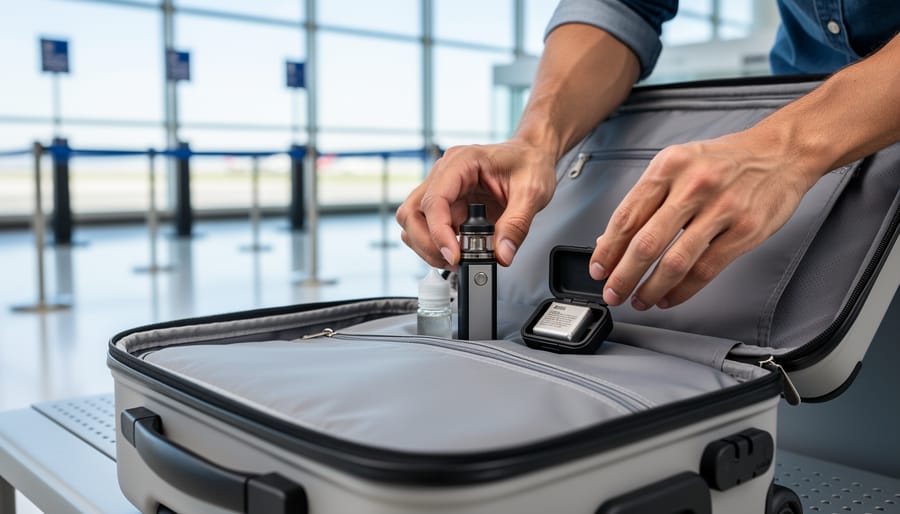
Planning a trip and wondering whether your vape can come along? TSA guidelines for vapes are straightforward: you must pack all electronic smoking devices in your carry-on bag only, never in checked luggage. That’s the cardinal rule, and it’s non-negotiable. Battery-powered vapes fall under strict lithium battery transport regulations, which means keeping them accessible in the cabin where any accidental activation can be spotted and addressed immediately.
The rules exist for good reason. Lithium-ion batteries, the power source in most vaping devices, pose a fire risk in the cargo hold where crew can’t intervene. Each battery must stay under 100 watt-hours, and lithium metal batteries can’t exceed 2 grams of lithium content. These aren’t arbitrary numbers. They’re the threshold between safe personal electronics and potential hazards at 35,000 feet.
Whether you’re traveling with a simple disposable pen or a sophisticated mod that pairs perfectly with your evening ritual (much like choosing the right CBD supplement to complement a meal), the preparation stays the same. You’ll need to prevent accidental button presses during transit, understand what TSA officers look for during screening, and know your airline’s specific carry-on limits. Some carriers cap the number of devices per passenger, and the final call on whether your equipment clears security always rests with the officer at the checkpoint.
This guide walks you through every step, from proper packing techniques to navigating security questions, so you can travel confidently without delays or confiscation.
What You Need to Know Before You Pack
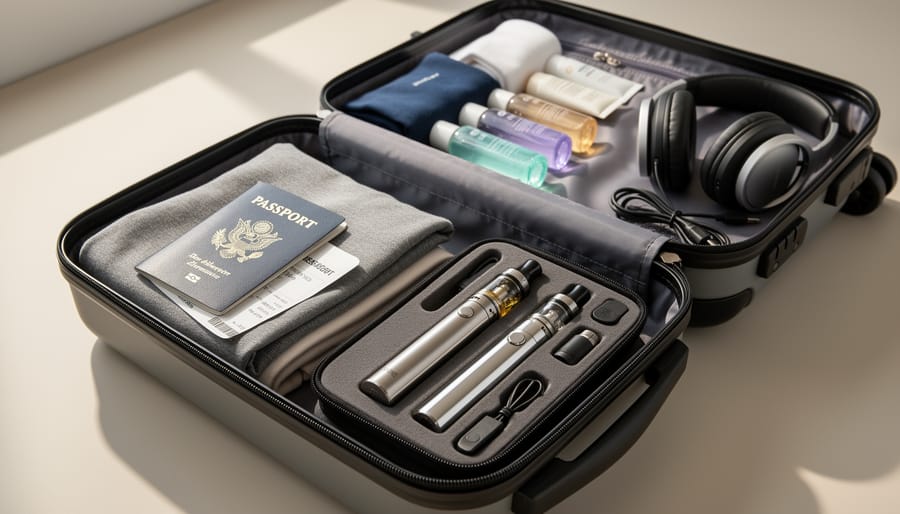
Before you head to the airport, gathering the right information and materials makes the TSA screening process straightforward and stress-free. Unlike laptops or phones, vaping devices contain lithium batteries with heating elements, a combination that creates potential fire hazards if improperly stored or accidentally activated during flight. This is why TSA mandates carry-on placement only and requires specific safety precautions that don’t apply to most other electronics.
Start by assembling these essential items and information:
- Your vape device with all components
- Original packaging or a sturdy protective case that prevents accidental button presses
- Battery specifications, either printed on the device or from manufacturer documentation
- Your airline’s contact information or website to verify their specific quantity limits
- An empty, accessible pocket in your carry-on for quick retrieval at security
Understanding your battery specifications is critical. Each lithium-ion battery must not exceed 100 watt-hours (Wh), while lithium metal batteries cannot contain more than 2 grams of lithium content. Most personal vaping devices fall well below these thresholds, but high-capacity mod batteries sometimes approach the limit. Check your device’s documentation or battery labeling to confirm compliance before you pack.
You’ll also need to research your specific airline’s policies, since carriers can impose stricter quantity restrictions than TSA’s baseline rules. While TSA allows vapes in carry-on bags, individual airlines determine how many devices one passenger may transport for personal use. A quick call to your airline or a visit to their website clarifies these limits and prevents last-minute surprises at the gate. Remember, effective measures for preventing accidental activation of the heating element aren’t optional, they’re required for transport, which is why protective cases or locking mechanisms are essential preparation steps.
Critical Safety Rules and Restrictions
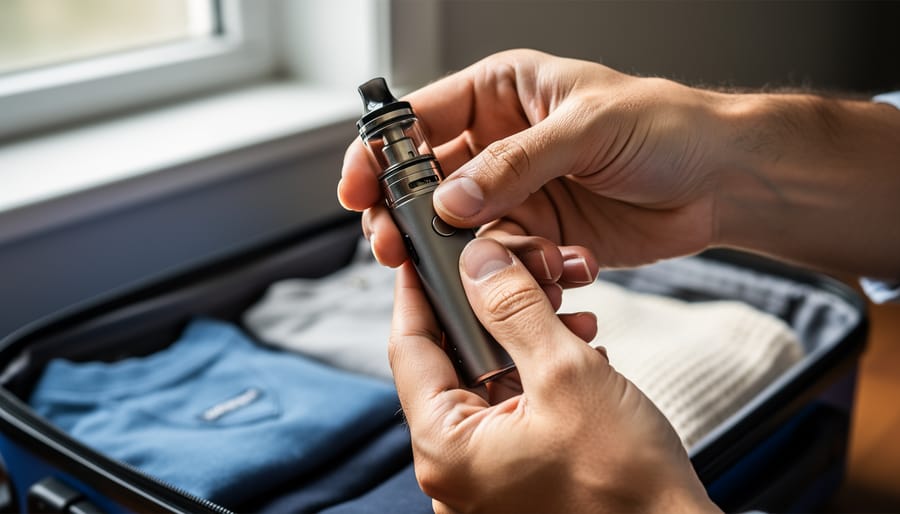
The TSA’s safety rules for vapes aren’t arbitrary bureaucracy, they exist because lithium batteries have caused in-flight fires when devices activate accidentally in the oxygen-poor cargo hold. Checked baggage is absolutely forbidden for electronic smoking devices. Period. If a TSA officer or airline agent finds your vape in checked luggage, they’ll confiscate it on the spot, and you may face additional security screening or delays. The cargo hold’s temperature fluctuations and lack of crew access create conditions where a battery fire could spread undetected, endangering everyone aboard.
Battery specifications determine whether your device clears security. Each lithium-ion battery in your vape must not exceed 100 watt-hours (Wh). For lithium metal batteries, the lithium content caps at 2 grams. Most consumer vaping devices fall well below these thresholds, but high-capacity mods or custom builds may approach the limits. You’ll find the Wh rating printed on your battery or in the manufacturer’s documentation, check before you pack, because a TSA officer won’t accept “I don’t know” as an answer.
Accidental activation poses the primary fire risk. Your device sits pressed against clothing, papers, or other items in your bag. A stray button press activates the heating element, which then burns continuously against fabric until the battery dies or ignites something. You’re required to take effective measures preventing this: remove batteries if possible, use a locking feature if your device has one, or pack it in a protective case that shields the activation button.
Remember that TSA officers hold final authority at checkpoints. Even if you’ve followed every published guideline perfectly, an officer can refuse your device if they judge it presents a safety concern. They’re trained to spot modified batteries, damaged devices, or unusual configurations that might not be safe for flight. Respectful cooperation speeds the process; arguing doesn’t change their decision-making power.
Step-by-Step Packing Process
Packing your vape correctly means following a precise sequence that keeps you compliant with both TSA and airline rules. Each step builds on the last, so take them in order rather than jumping around. Here’s the complete process from your packing table to the security checkpoint:
- Place your vape device in your carry-on bag only. Never pack it in checked luggage. TSA prohibits electronic smoking devices in the cargo hold because of fire hazard risks from lithium batteries in pressurized, unmonitored spaces. Your vape stays with you in the cabin, period.
- Disable or lock the heating element to prevent accidental activation. Most devices have a lock function (often clicking the fire button five times rapidly). If your vape lacks this feature, remove the pod or tank to break the circuit. Accidental activation during flight creates serious fire risk, so this step isn’t optional.
- Verify your battery specifications meet TSA limits. Check your device documentation for lithium-ion batteries with a Watt-hour rating of 100 Wh or less, or lithium metal batteries containing no more than 2 grams of lithium. Most personal vapes fall well within these limits, but high-powered box mods sometimes push close to the threshold. If you can’t find the specs, contact the manufacturer before your trip.
- Check your airline’s quantity restrictions for personal use. TSA sets the baseline rules, but individual carriers can impose stricter limits on how many devices you bring aboard. Call your airline directly or check their website for specifics, because policies vary widely between carriers.
- Keep your vape accessible during security screening. Don’t bury it at the bottom of your bag under clothing and toiletries. Place it near the top or in an outer pocket so you can retrieve it quickly if a TSA officer asks to inspect it separately. This speeds up the screening process and reduces the chance of additional questioning.
- Present your device separately at the checkpoint if requested. Some officers will ask you to remove it from your bag and place it in a bin, similar to laptops and large electronics. Others will screen it inside your carry-on. Follow whatever instruction the officer gives you, because the final decision on screening procedures rests with them.
The key to smooth passage is treating each step as non-negotiable. Skip the locking mechanism, and you risk confiscation or being pulled aside for additional screening. Pack it in checked luggage by mistake, and security may remove your bag from the plane entirely. Verify battery specs in advance rather than at the gate, when it’s too late to make adjustments.
If you’re traveling with spare batteries (separate from the device), those follow the same carry-on-only rule. Store them in their original packaging or a protective case that prevents terminal contact. Loose batteries bouncing around your bag can short-circuit if they touch metal objects like keys or coins.
Navigating the TSA Checkpoint
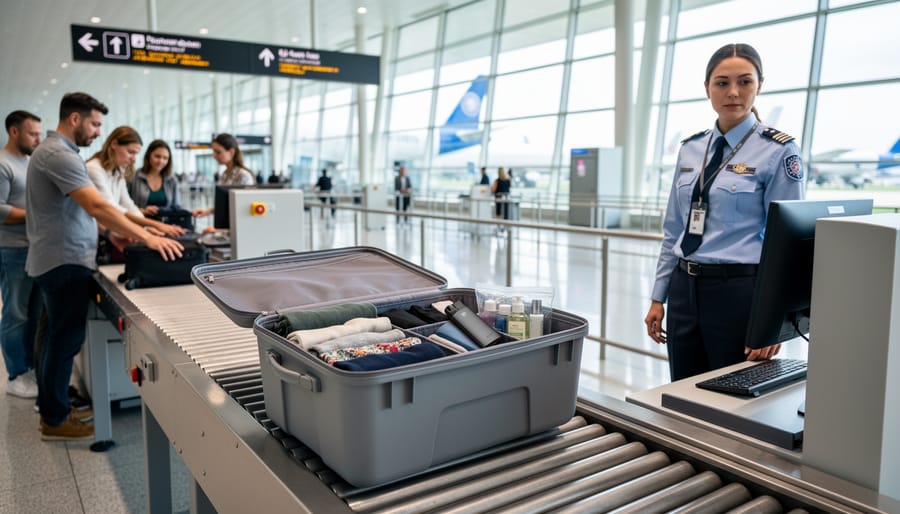
When you reach the security checkpoint, have your vape easily accessible in your carry-on bag rather than buried beneath clothing or packed items. TSA officers will scan your luggage through X-ray machines, and electronic devices with lithium batteries often trigger additional inspection.
If an officer asks to examine your vape, remain calm and cooperative. They’re checking that the device meets battery specifications, confirming it’s properly protected against accidental activation, and verifying compliance with carry-on requirements. You may be asked to remove the device from your bag and place it separately in a bin, similar to laptops or tablets. Respond promptly to any requests and answer questions honestly about the device’s specifications.
TSA officers hold final authority on what passes through the checkpoint. Even if you’ve followed every guideline, an officer can deny an item if they have safety concerns. Don’t argue or attempt to negotiate, their decision is absolute, and challenging it will only delay your travel and potentially escalate the situation.
For the smoothest experience, arrive early to allow time for any additional screening. Keep your vape visible and separate from other electronics. If you’re traveling with multiple devices, be prepared to explain they’re for personal use. Avoid defensive or nervous behavior, which can prompt closer scrutiny. Most importantly, never attempt to hide your vape or misrepresent where it’s packed, honesty and preparation prevent confiscation and missed flights.
Airline-Specific Guidelines and Quantity Limits
While TSA sets the baseline security rules, your airline can, and often does, impose stricter limits on how many vaping devices you can carry for personal use. These restrictions vary widely between carriers, so you can’t assume what worked on one flight will fly on another. Some airlines cap the number of devices at two or three per passenger, while others may allow more or have different policies for international versus domestic routes.
Before you book or pack, visit your airline’s website and search for their specific policies on electronic smoking devices or lithium batteries. Look for terms like “dangerous goods,” “battery-powered devices,” or “prohibited items” in their carry-on baggage section. If the information isn’t clear online, call the airline directly, better to spend five minutes on hold than to surrender a device at the gate. Remember that these carrier-specific rules exist alongside TSA guidelines, not in place of them, so you must comply with both.
This same research-first approach applies when exploring other travel essentials, whether you’re checking our CBD supplement guide before an international trip or confirming liquid restrictions for e-juice bottles. The key is always verifying policies specific to your journey rather than relying on general assumptions.
Common Questions About Traveling with Vapes
Can I use my vape on the plane?
No, federal law prohibits the use of electronic smoking devices on all commercial flights. Violating this rule can result in significant fines and potential criminal charges.
What if my vape has a built-in battery?
Devices with built-in batteries follow the same carry-on-only rules. The battery must not exceed 100 Wh for lithium-ion or 2 grams of lithium metal content, and you must take measures to prevent accidental activation during transport.
Can I bring e-liquid in my carry-on?
Yes, but all liquids must comply with TSA’s 3-1-1 rule: containers of 3.4 ounces (100ml) or less, placed in a single quart-sized clear plastic bag. This applies whether your e-liquid contains nicotine, CBD, or flavoring compounds.
What happens if TSA finds my vape in checked luggage?
TSA will confiscate any electronic smoking devices found in checked baggage. You won’t get the device back, and depending on the circumstances, you may face additional screening or questioning.
Understanding how CBD works becomes especially important when traveling internationally with CBD-containing vape products. Domestic TSA guidelines address the transport mechanism and battery safety, but they don’t supersede federal law regarding controlled substances or address destination-country regulations.
International travel introduces another layer of complexity. Many countries maintain strict prohibitions on vaping devices entirely, while others permit them with specific restrictions that differ from U.S. rules. Before booking an international flight, research both your destination country’s import laws and any transit countries where you might connect. Some nations treat e-liquids as tobacco products subject to heavy taxation, while others classify certain vape formulations as controlled substances regardless of their legal status in the United States.
The officer at the checkpoint makes the final call on whether your device passes through security. If you’re asked to demonstrate that your device powers on, keep it charged enough for this verification. If additional screening is required, remain cooperative and expect the process to take a few extra minutes. Having your airline’s written policy on hand can help clarify any confusion about quantity limits, though the TSA officer’s decision about safety and regulatory compliance takes precedence over airline guidelines.
After You Land: Continuing Your Vape and Culinary Journey
Once you’ve cleared security and settled into your destination, take a moment to verify your device arrived intact and familiarize yourself with local vaping regulations, some cities and countries impose stricter rules than U.S. airports. With your gear safely in hand, you’re free to explore the culinary landscape ahead. Consider how a citrus-forward vape can brighten the tangy notes in fresh ceviche, or how smoky mezcal flavors in your device complement the char on grilled carne asada. Vanilla and custard profiles enhance the creamy richness of tres leches, while herbal vapes bring out the complex spice layers in mole poblano. Beyond flavor pairings, some travelers incorporate CBD health benefits into their dining routine for relaxation after a long flight. Mastering TSA guidelines means you can focus on what truly matters: savoring each meal and discovering how thoughtful pairings transform your travel experience into something memorable.