
The “x” in x tortilla chips is a stand-in, and that’s exactly the point: the chip you reach for depends on which tortilla it grew up as. Tortilla chips come in a handful of distinct families, and each one traces back to a different corn, a different masa, or a different way of cooking. Yellow corn chips crunch with a sweet, toasty snap. White corn chips taste cleaner and lighter, closer to the tortillas served at a taquería counter. Blue corn chips bring an earthy, nutty depth. Flour-based chips fry up blistered and tender. Restaurant-style chips, thin and a little irregular, are the ones you’ll find overflowing from baskets on tables across the country.
Here’s the short version of choosing well: match the chip to the job. Sturdy, thick-cut corn chips carry chunky salsa and beans without surrendering. Delicate, thin ones belong with smooth salsas and a squeeze of lime.
The story starts in the kitchen, not the factory. Cooks in Mexico have long turned day-old tortillas into totopos and tostadas, crisping them on a comal or in hot oil so nothing went to waste. That frugal, delicious habit is the ancestor of every bag on the shelf.
Ahead, we’ll break down each variety, compare them side by side, and show you what separates a great chip from a forgettable one.
From Comal to Crunch: The Story of Totopos
Long before anyone dreamed of a triangle-shaped chip, there was corn, and the people who understood its magic. For thousands of years, Mesoamerican cooks have soaked and simmered dried maize in water and mineral lime, a process called nixtamalization. It softens the kernels, unlocks their flavor and nutrition, and gives us the fragrant masa that becomes every tortilla. That humble dough is where our story begins.
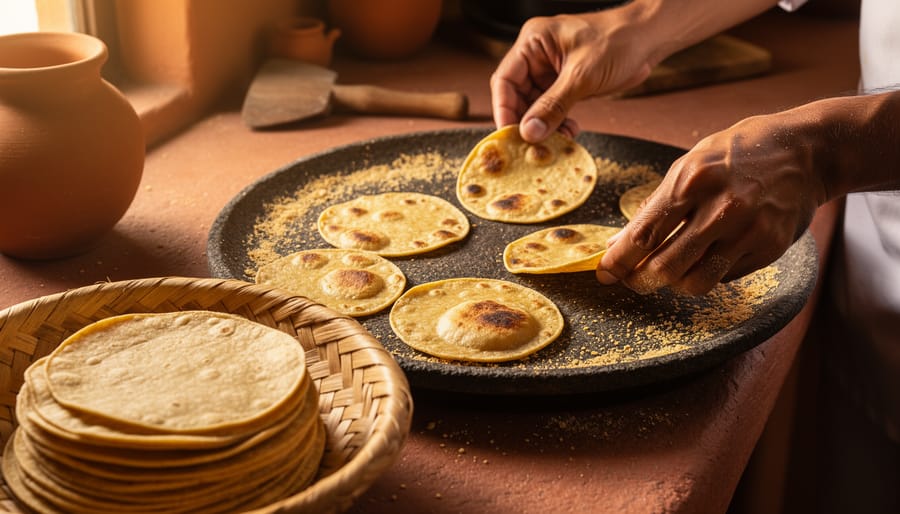
Out of that tradition came the totopo. In Oaxaca, particularly the Isthmus of Tehuantepec, totopos are big, rustic rounds of tortilla toasted on a hot clay comal until they turn golden and brittle, often pocked with little dimples. They snap like crackers, smell of campfire and sweet corn, and travel well, which made them a trusted companion for long journeys and busy market days.
Here’s the thing about a Mexican kitchen: no tortilla ever goes to waste. A grandmother will tell you that yesterday’s leftovers are tomorrow’s treasure. Stale tortillas get torn up and crisped for chilaquiles, tucked into soups, or toasted alongside a bowl of beans. Crunch was never a luxury, it was a clever, loving answer to a simple question: what do we do with what’s left?
That’s also why a totopo isn’t quite the same creature as the neat triangular chip you’ll find in a restaurant basket. The commercial tortilla chip has its own separate, well-documented history, and it grew up along a different path. If you’ve ever wondered how those paths diverged, our look at Tex Mex vs Mexican cooking sheds light on how the same ingredients can tell very different stories.
Still, every crunchy bite carries a trace of that first comal.
The Tortilla Varieties Behind the Chip
Yellow and White Corn: The Classic Foundation
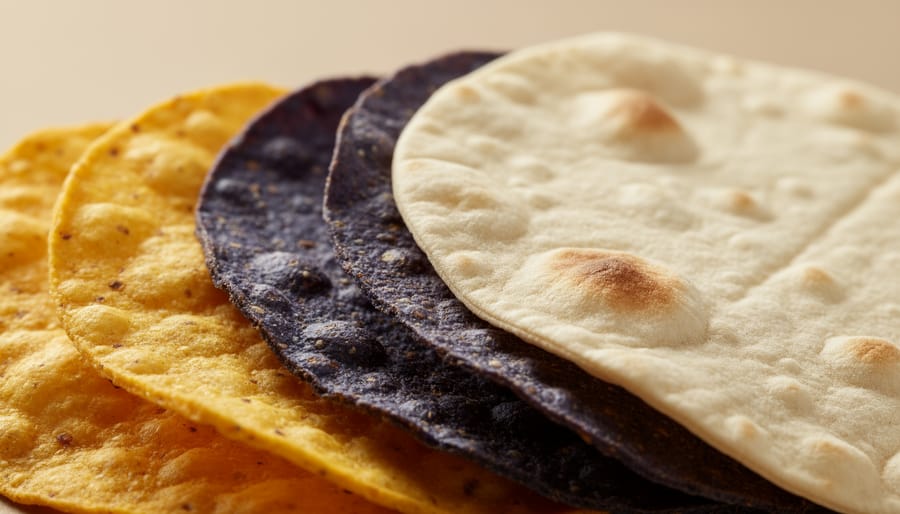
Every great totopo begins with the humble corn tortilla, pressed from nixtamalized masa: dried corn simmered with lime, ground, and shaped by hand or machine. That ancient step gives the chip its earthy, toasty sweetness and that unmistakable scent of warm corn. If you’re curious how this foundation stacks up against its northern cousin, our guide to corn vs flour tortillas explores the differences at the table.
White corn tends to taste milder and cleaner, with a delicate sweetness. Yellow corn leans fuller and more rustic, with a deeper, almost buttery toastiness. Either way, corn is the traditional heart of Mexican chips, sturdy enough to scoop and flavorful enough to stand alone.
| Tortilla Variety | Chip Flavor and Texture | Best Pairing |
|---|---|---|
| White corn | Mild, lightly sweet, crisp and tender | Guacamole, ceviche |
| Yellow corn | Fuller, toastier, sturdy crunch | Salsa roja, queso |
Blue Corn and Heirloom Maize: Color, Nuttiness, and Heritage
Blue corn chips look like dusk on a plate, a deep slate that signals something different before you take a bite. The flavor delivers: nuttier, slightly sweeter, with a toasted depth that white or yellow corn rarely reaches. Red, purple, and speckled heirloom varieties each add their own quiet notes, from earthy to almost chocolatey.
Behind that color is maíz criollo, native corn grown from seed passed down through generations. Mexico is considered the birthplace of maize, and its diversity is staggering, with dozens of distinct landraces adapted to mountains, valleys, and coasts. Each one carries the story of a particular place.
Many families still save their best ears every harvest, setting them aside as seed for spring. In some villages, neighbors trade kernels the way others might trade recipes, keeping old varieties alive even when commercial hybrids would be easier to plant. That patience lives in every heirloom chip, which is why a bowl of blue corn totopos feels less like a snack and more like a handshake with history.
Flour Tortilla Chips: Northern Mexican Roots
Head north, toward Sonora and its neighbors, and the tortilla changes character. Here, wheat is part of the story, and the flour tortilla is a proud regional tradition, not a substitute for anything. Cooks stretch the dough thin, sometimes nearly translucent, and cook it on a hot comal until it blisters and puffs.
Turn that tortilla into a chip and you get something distinctly different. Flour chips fry up light and airy, with bubbled, crackly surfaces that shatter rather than snap. Baked, they turn delicate and golden with a toasty, gentle flavor. There’s no earthy corn sweetness here, just a mellow, buttery wheat note that lets the salsa take center stage.
That softer personality makes flour chips a lovely match for creamy dips and mild salsas. Think of them as the quieter, more tender cousin at the table, and a worthy one.
Specialty Tortillas: Nopal, Chile, and Beyond
Beyond the everyday corn and flour tortilla lies a playful world of specialty tortillas, where cooks fold local ingredients straight into the masa. Nopal is a favorite example. The tender cactus paddle brings a subtle green tang, a faintly tart, vegetal note that makes the finished chip taste almost like a breath of the Mexican countryside. Chile-spiced versions work in a different way, carrying warmth in the dough itself so the heat builds slowly rather than arriving all at once on the surface.
You may also come across tortillas colored and flavored with other ingredients, such as spinach, beet, or tomato, each giving the chip a hint of its source and a splash of color on the plate. These are often small-batch, artisanal touches, and they vary from one kitchen to the next.
Because their flavors are bolder, specialty chips tend to shine with simpler companions. A squeeze of lime, a bowl of plain guacamole, or a mild fresh salsa lets their personality come through without competing for attention.
What Makes a Great Tortilla Chip: Texture, Thickness, and Freshness
A great chip starts with the masa. When the corn has been properly nixtamalized, you can taste it: a toasty, slightly sweet, unmistakably corny flavor that holds up long after the salsa hits. Chips made from lackluster dough taste flat, like crunchy cardboard with salt on top.
Thickness comes next, and it’s all about balance. Too thin and the chip shatters the moment it meets a spoonful of guacamole. Too thick and it turns hard and jaw-tiring. The sweet spot has a clean snap at the first bite, then a satisfying sturdiness that lets you scoop without wincing.
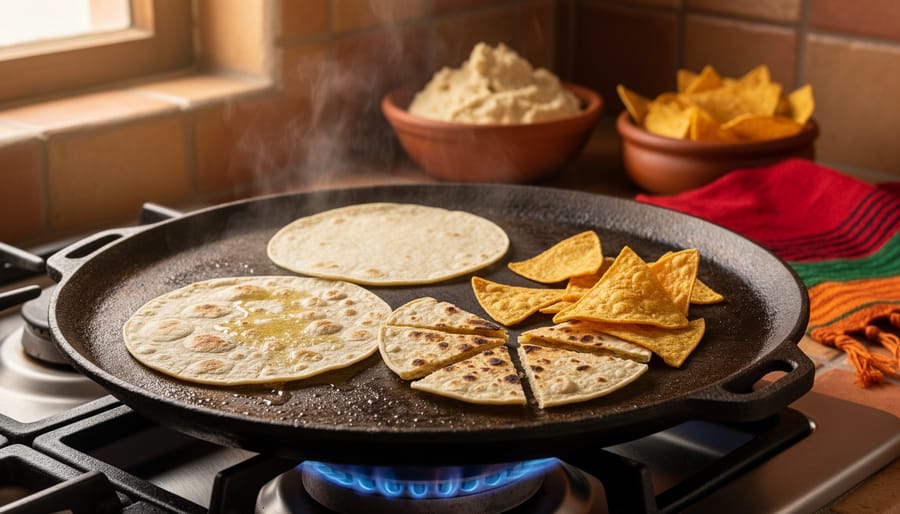
How a chip is cooked shapes its personality. Frying gives that golden, bubbly, rich crunch most of us crave. Baking yields a lighter, drier crisp that lets the corn flavor stand out. And toasting on a comal, the way totopos have long been made, brings smoky, rustic notes and a chewier, more irregular bite. None is wrong. Each simply suits a different mood and a different dip.
Salt deserves a careful hand. You want enough to wake up the corn, not so much that it drowns out the salsa or leaves you reaching for water after three chips.
Then there’s freshness, the quiet hero. A chip that’s just been made carries warmth, aroma, and a crispness that packaged versions rarely match. That’s why house-made chips taste different, and why a basket arriving at the table still warm, like the ones at El Caballito, can feel like the real beginning of the meal.
Pairing Chips with Salsas, Dips, and Drinks
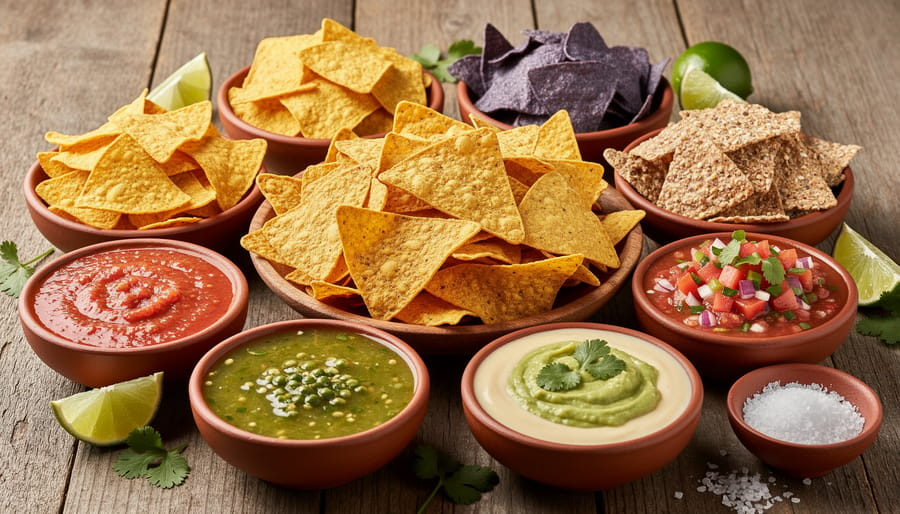
A great pairing starts with the chip’s backbone. Sturdy, thick-cut yellow or white corn chips are built for heavy lifting, so reach for them when the dip has some weight. A chunky guacamole, with its creamy avocado and bits of onion and tomato, sits happily on a corn chip that won’t snap under the scoop. The same goes for warm queso, where a toasty, earthy chip stands up to all that molten richness.
Smoky salsa roja loves a corn chip, too. The roasted, slightly charred flavors of the chiles echo the toasted notes of the masa, and the two feel like they grew up in the same kitchen. Blue corn chips, with their nutty depth, make a lovely partner here.
Bright, tangy salsa verde and a bowl of ceviche call for a lighter touch. A thin, crackly flour chip lets the lime, cilantro, and tomatillo shine without competing, and it shatters delicately against fresh fish and citrus.
When it’s time to sip, think refreshing. A citrusy margarita or a cold beer cuts through salt and spice beautifully, and the lime in both plays off the tang of a good salsa. For a zero-proof option, an agua fresca of jamaica, horchata, or watermelon is just as satisfying, cooling the heat of a spicy salsa while adding a bright, fruity sweetness to every crunchy bite.
Tortilla Chip FAQs
What’s the difference between totopos and tortilla chips?
Totopos are traditionally made by toasting tortillas on a comal, often leaving them rustic and uneven. The triangular chips you find in most restaurants are cut and fried or baked, so they’re thinner and more uniform.
Are corn or flour chips more traditional?
Corn is the older foundation, tied to nixtamalized masa and Mesoamerican cooking. Flour chips have their own proud roots in northern Mexico.
Why do some chips taste more toasty than others?
It comes down to the masa and how the chip is cooked. Corn with deeper flavor, plus longer toasting or frying, builds that roasted, nutty note.
Can chips be baked instead of fried?
Yes. Baked chips turn out lighter and crisp, though they can be a bit less rich than fried ones.
Blue corn chips are worth seeking out too. Many people notice a nuttier, slightly sweeter taste than you get from white or yellow corn.
Every chip carries the story of the tortilla it came from. The earthy sweetness of yellow and white corn, the nutty depth of blue maize, the light, blistered snap of a northern flour chip, the bold personality of a nopal or chile tortilla: each one is a small lesson in Mexican cooking crisped and ready to scoop.
So next time a basket lands on your table, slow down. Listen for the crunch, notice the toasted corn aroma, and taste the difference a good tortilla makes. And if you want it at its freshest, come enjoy warm chips and vibrant salsas at El Caballito.